
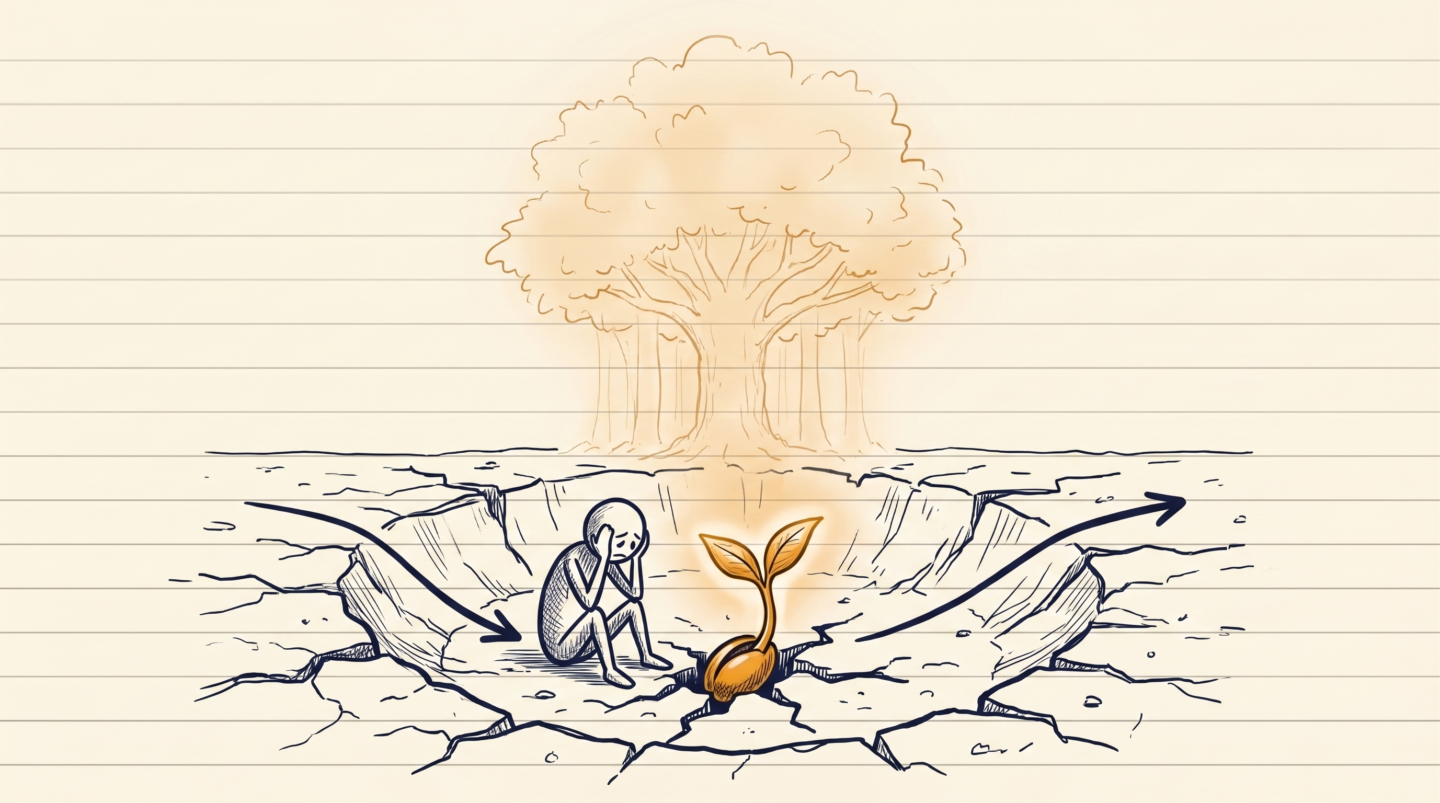
Three weeks of twelve-hour days were sitting in my bones. I was in Spain, supposed to be recharging, and instead I noticed something was tipping over. Not my product, but me. I was slowly keeling over.
When you run at the limit for weeks, mistakes happen. Not the big, dramatic ones. The small ones that creep in and then turn into a worst-case mess: I had accidentally pushed something from the test track onto the real, live track. That had consequences for customers. It looked unprofessional, and it went against the exact standard I set out with, namely to deliver clean quality.
That evening I opened my ticket system, the list with everything still open. Around 350 entries. At the same time there was a line of people outside: partners who want to sell the product, prospects who want to use it, and at the end of the month bills want to be paid, the bread on the table and by now also my AI helpers, meaning the subscriptions that make all of this possible in the first place. And in the middle of it me, alone, overtired, with the one thought I had bitten back for weeks: I can't do this on my own anymore.
What happened at exactly that low point changed everything. But to tell it I have to start the next morning.
What became clear to me at the olive stand
The next morning I stood in the fish market, tasting olives, and for the first time in weeks my head went quiet enough for a clear thought. It wasn't a nice thought. It was: this can't go on like this.
When you alone are responsible for something, there are islands. A good meal, a walk by the water. But really switching off is no longer possible once everything hangs on you. The responsibility sits at the table with you over morning coffee and looks at you.
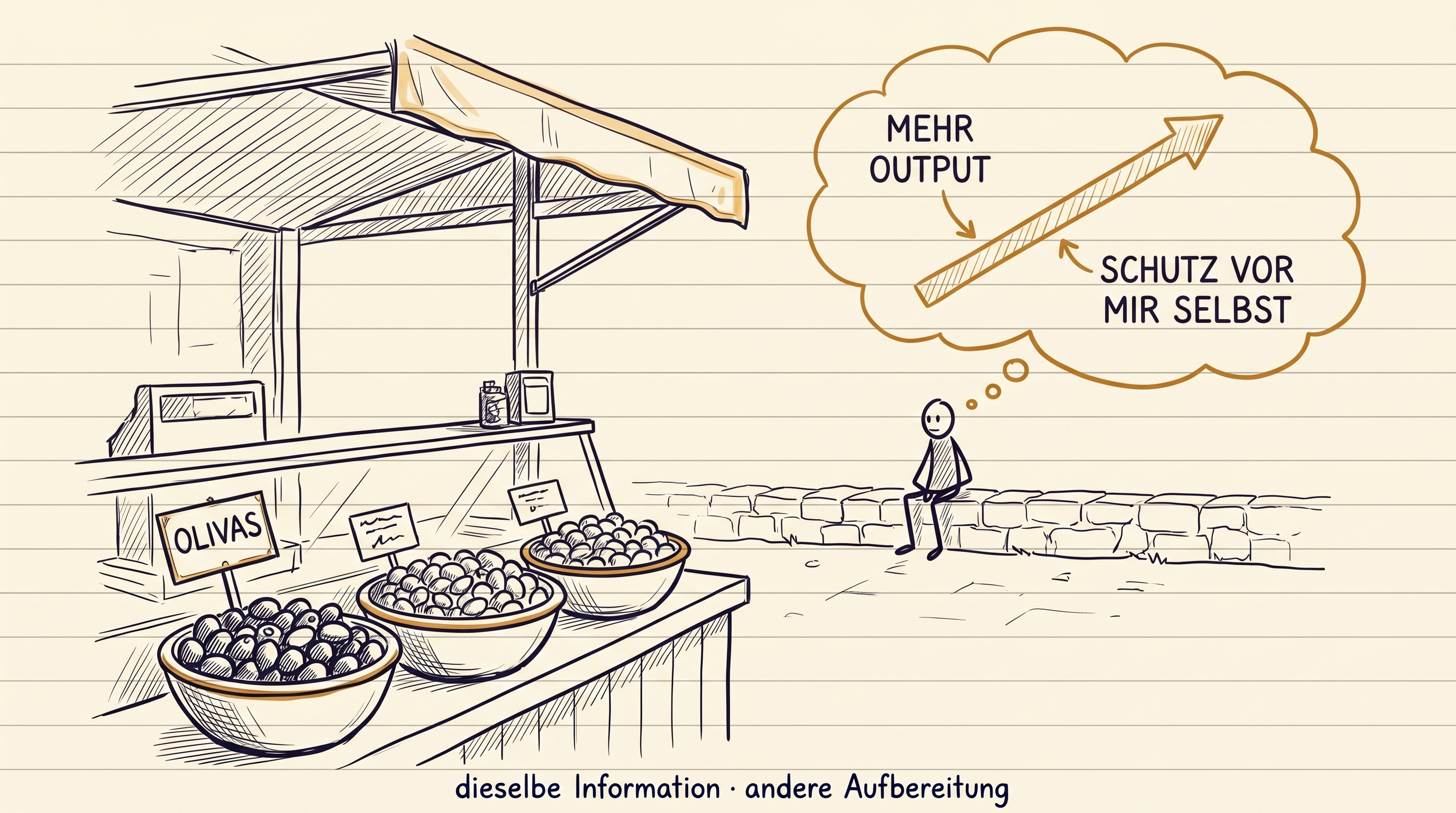
Later in the day I sat with the laptop on the balcony, the sea right in front of me, and tried to turn that vague "this can't go on" into a question you can actually answer: how do we do this now? And the pressure broke apart into two clear paths. Two things had to change, and at the same time.
The first path: I have to get more done. Three sales partners were waiting for my product to be ready for the market. Several people had already asked directly whether they could try it early. The 350 tickets didn't get fewer, they got more.
The second path: I have to protect the product. And with it the company growing out of it, and above all the customers. Because a mistake like last week's must never again reach someone who is just starting to trust me.
Trust is earned piece by piece, drop by drop. But make one big mistake with a product like this and you spill that trust like a whole bucket at once. One tired evening can be enough.
The second path I could see right away. Picture a restaurant with two kitchens. In one I practice, experiment, make a mess on purpose, because no guest ever eats there. In the other, only what goes out to guests is cooked. In my case there was no real wall between these two kitchens, and that is exactly why my experimental dish had ended up on a guest's plate.
So in one night I built the wall. A hard separation between the area where I practice and the area that reaches customers. And a big red button on the door between them, an emergency stop. If tired Phil messes something up at three in the morning, it slams against the wall and stays in the practice room. It never even reaches the customer technically. One night of work, and that path was done.
The first path, getting more done, was the expensive one.
My first reflex: just hire someone
I sat on the balcony, the sea in front of me, thinking about how to get more done. And to the realization from the night before, I am the bottleneck, my head answered immediately, without thinking: then just hire someone.
Sounds logical. Too much work for one person, so bring in a second. That is exactly what my sales partners and three experienced founders had advised me over the last six months. You need people. You can't do this alone. When everyone tells you the same thing, the reflex feels like insight.
So I sat down and simply worked out what that help would cost.
What a second person really costs
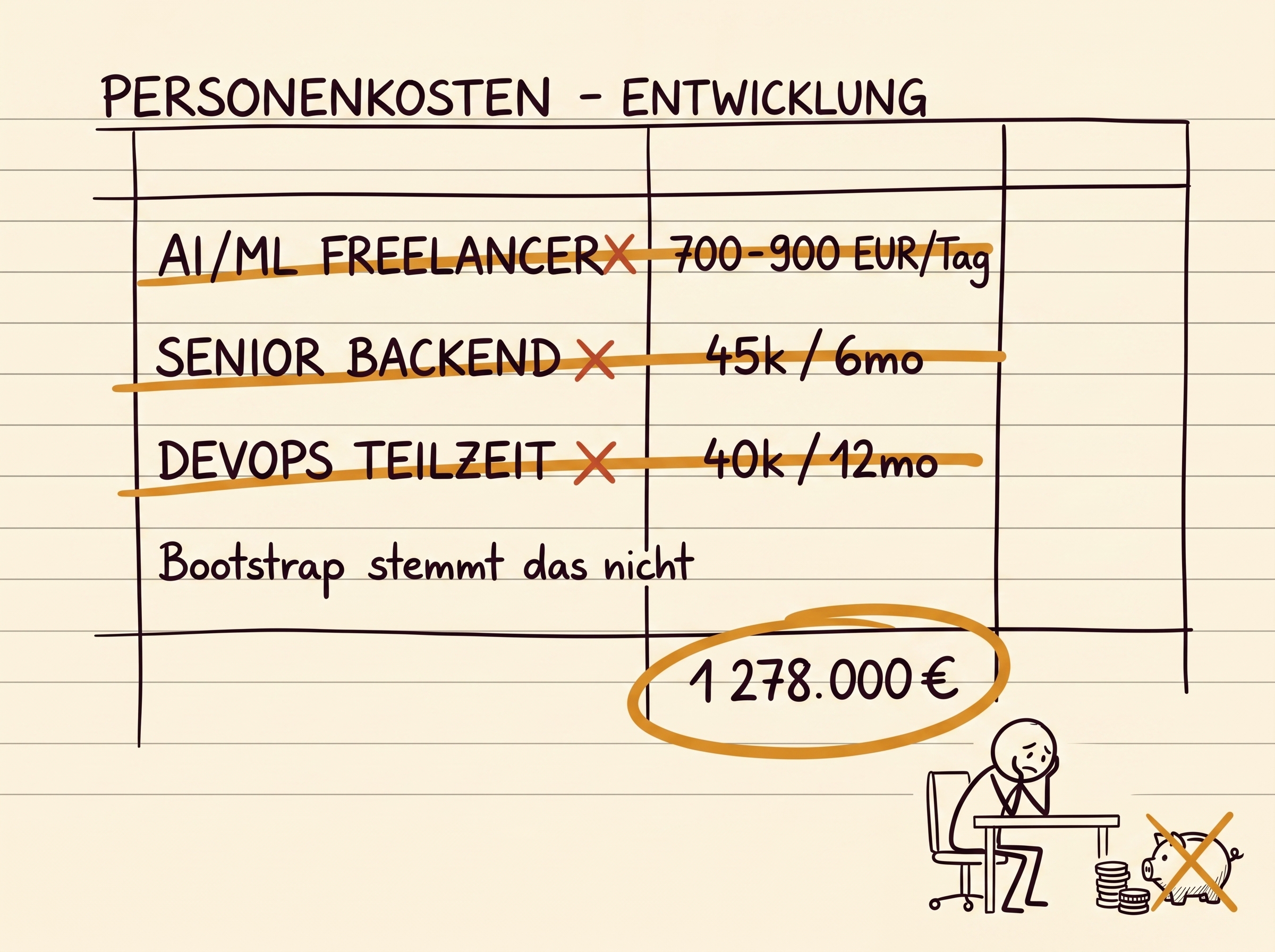
"My reflex was: hire someone. And then the numbers didn't add up."
A really good specialist for the kind of work I need costs 700 to 900 euros a day in Germany. For a six-week project phase that quickly adds up to 18,000 to 25,000 euros. On top of that comes expensive computing power for the machines someone like that works on, another 2,700 euros or so. That makes 22,000 to 28,000 euros. For a single phase.
And it doesn't stop at one phase. My product has to grow in several places at once, so I would actually need more than one person. An experienced developer for half a year comes to 45,000 euros. Someone who keeps the technology alive in day-to-day operation, part-time over a year, another 40,000. I could look abroad for less, roughly half, but then the risk rises elsewhere, and that eats the savings right back up.
Even in the absolute cheapest case I am talking about a sum I cannot carry out of my own pocket. Not without a big investor behind me. Not without the costs eating up the air I breathe before I even have my first paying customer.
But the real catch was a different one, and it only clicked while I was doing the math. Even if I had the money, a new person wouldn't get my product finished faster, but slower at first. Anyone who joins has to grasp what it is even about. I have to explain everything, check their work, answer questions. That is a double minus: I spend money I don't have, and I give up time I have even less of. My friend Jacob, an experienced developer who looks after the technology in the background for me, put it dryly: in the first months you tend to pay extra, because the onboarding eats more time than the new person brings in at the start. And time was exactly what was on fire.
The one sentence I had to read three times
So if hiring allowed neither the money nor the time, only one direction was left: start with myself, with my own processes. Not bring someone in, but get better at what I already do anyway.
Looking for that, I came across a term: Compound Engineering. Sounds clunky, but it means something simple. Every time you solve a problem, you write down the lesson from it so that next time it is automatically there again. Your work earns interest, like money in an account that never starts from zero again. I asked my AI assistant, a kind of co-thinking colleague, what that would concretely mean for my output. The answer:
"With the right setup, you get five to seven times as much out of your own work."
That was the turning point. Not "hire someone", but "set up your own work so that it multiplies".
Without the right context, the AI just makes something up
Here I have to briefly explain what it actually came down to, because that is the core. An AI that doesn't know how something is done at our place, or where in the program it should look, doesn't ask. It just makes up something that sounds plausible and merrily builds on top of it.
Before, my AI was like an intern you feel you have to explain everything to from scratch every morning. Eager, fast, but with no memory of the company. My product is large. It didn't know which decisions sit behind it, which guidelines apply, which technology runs in the background. Above all it didn't know where anything was. So I constantly had to explain where it should look and how. That ate up an enormous amount of time, and worse, it led to mistakes, because it kept building on false assumptions.
The whole thing has a name: context engineering. Just like a human, an AI has only a limited capacity. You have to give it exactly what it needs for the task, no more and no less. If I only want to change a small part of the program, it can't just read half a million lines of code, that doesn't fit in its head at all. It is like wanting to tell you what was in today's news, but first explaining the entire world history of the last hundred years to you for fifty hours. Half an hour in at the latest, you tune out.
That leaves the way out the AI takes on its own: it searches the code for keywords, stubbornly literal. If the thing is called something else at the decisive spot, and that is the rule rather than the exception, it finds nothing and falls into the same trap again, it invents. That costs twice. My lifetime, which I lose to explaining, and real money, because every one of these requests eats computing power, meaning electricity.
So I built my company a memory
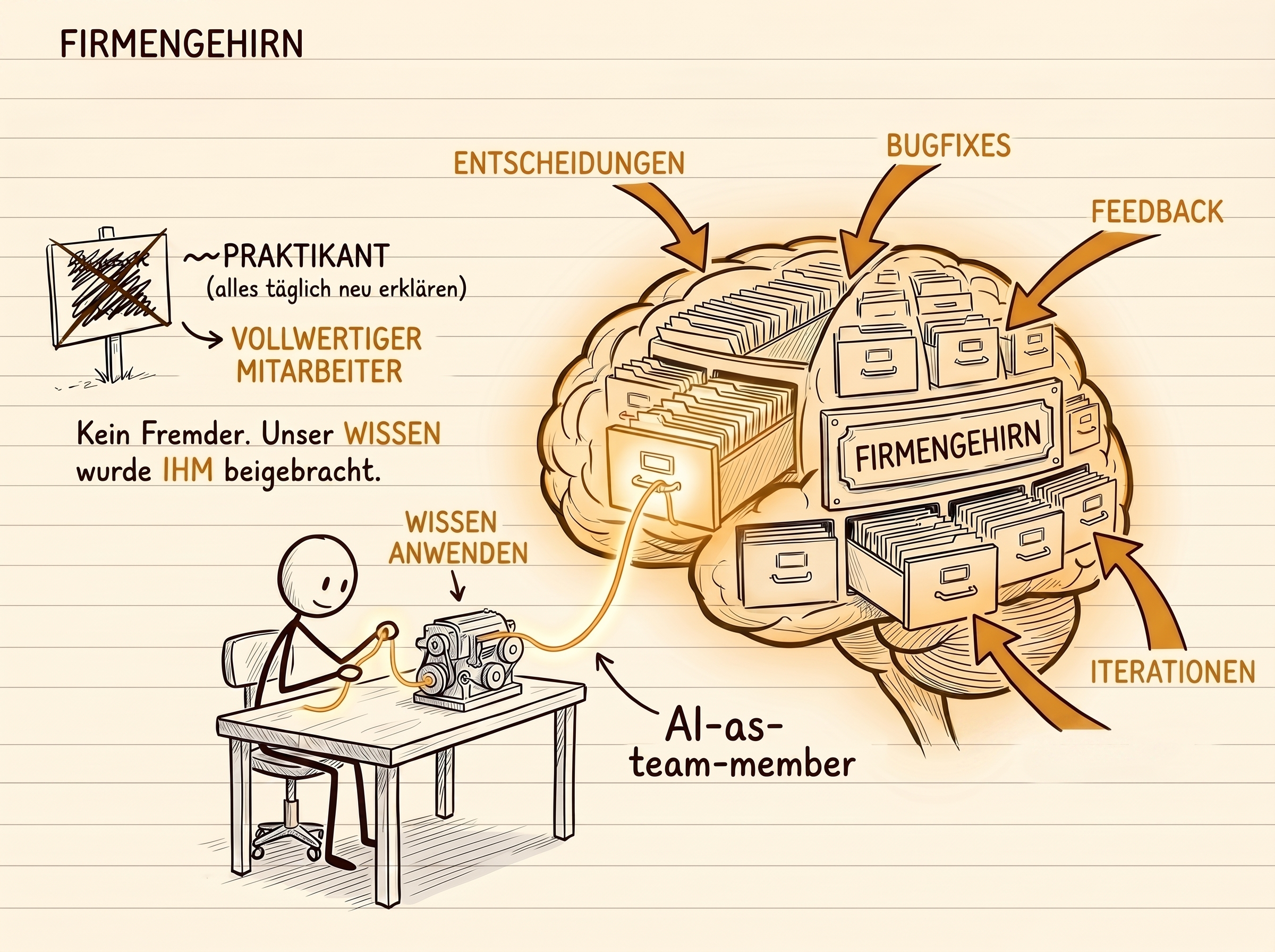
The solution was to give the AI a memory for the whole company. A store into which every decision flows, every technical change, every fixed bug, every piece of user feedback. And each of these entries makes the next task a tiny bit easier.
I picture this store as a piece of land. Every entry is a seedling. Leave them standing and let them grow, and over time a whole forest emerges. Ordinary AI drives the lawnmower across exactly this land every morning: session over, everything mown flat, next day bare soil again. I don't mow anymore, I tend and care for it. I pull the weeds, the outdated and the no-longer-true, and I make sure the big old trees are doing well, the foundational decisions everything else rests on.
On top of that sits a very fast search layer that doesn't search stubbornly by words, but by meaning. If I ask "where does this one thing live everywhere?", it finds the right places, even when they are called something different at every corner. The intern I explain everything to every morning turns into a full team member who knows the whole company and always knows where to look it up.
Three subscriptions for this AI assistant cost 660 euros a month together. The bill jumps from 25,000 euros for one phase to 660 euros a month. But the money wasn't even the real point. The point was what this full context does in everyday work.
40,000 euros of value, 660 euros paid
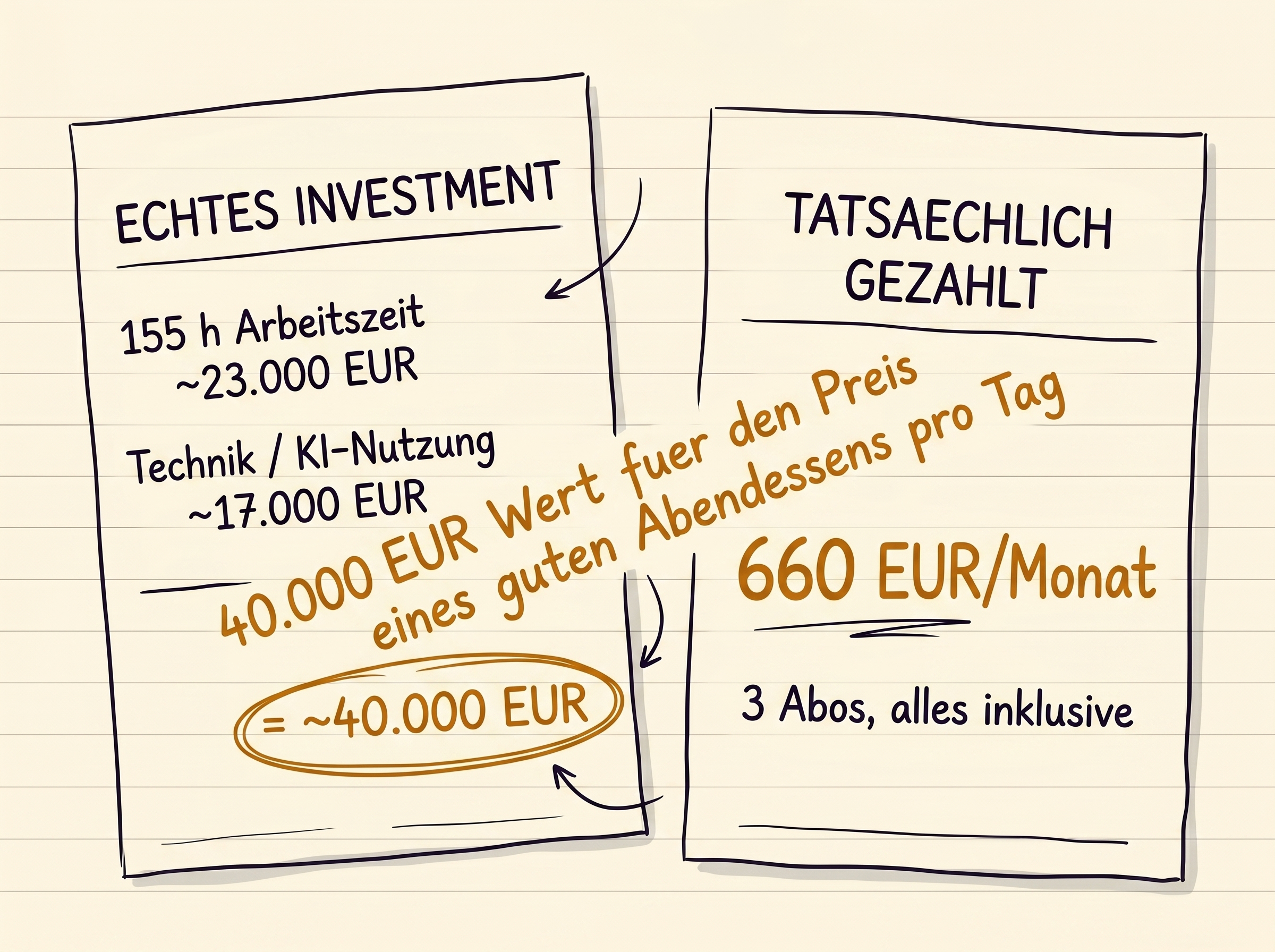
I built it in 16 days, from the 30th of April to the 15th of May. I tracked my hours, 155 of them. Calculated at the hourly rate of an experienced developer, that is about 23,000 euros of working time I put into this thing. I paid for it not with money, but with sleep.
On top of that comes the technology that drives the whole thing under the hood, the requests to the AI, the computing work in the background. Had I billed those individually by usage, around 17,000 euros would have come together. Add both up, my working time and this technology, and there is a real investment of about 40,000 euros in this thing. Actually paid out of pocket, 660 euros a month. That is the whole difference: 40,000 euros of value for the price of a good dinner a day.
And it is exactly this flat price that decides whether the thing could come about at all. Picture a gym. If I paid per use, meaning for every single repetition on every machine, then I think three times about whether I dare an attempt, and start saving in exactly the place where trying things out is the whole point. With the flat rate of 660 euros a month I go in and keep trying until it fits. The same thing twenty times over four weeks, five attempts at once, and the bill stays the same. Only this free experimenting made the thing possible. Had every failed attempt hurt, I would have stopped experimenting before it got good.
Three things that were impossible only yesterday
The full effect doesn't show in some demo, but in the perfectly normal working day. Three things now happen every day that make the difference between an intern and a real team member tangible.
First, finding the right spot instead of building junk. Picture an intern who is supposed to find a fault in your business, but can only open the one folder lying open on the desk right now. If they find nothing, they make up the rest. That is exactly what my AI used to do: it invented a part of my program that never existed like that, and promptly built a fix for its own invention. Today it asks the company brain "where does this thing live everywhere?" and gets, in one go, the original spot, the two places that use it, and the outdated test that still assumes the old version. It sees the whole chain at once, instead of guessing. And whoever sees the whole chain builds no junk.
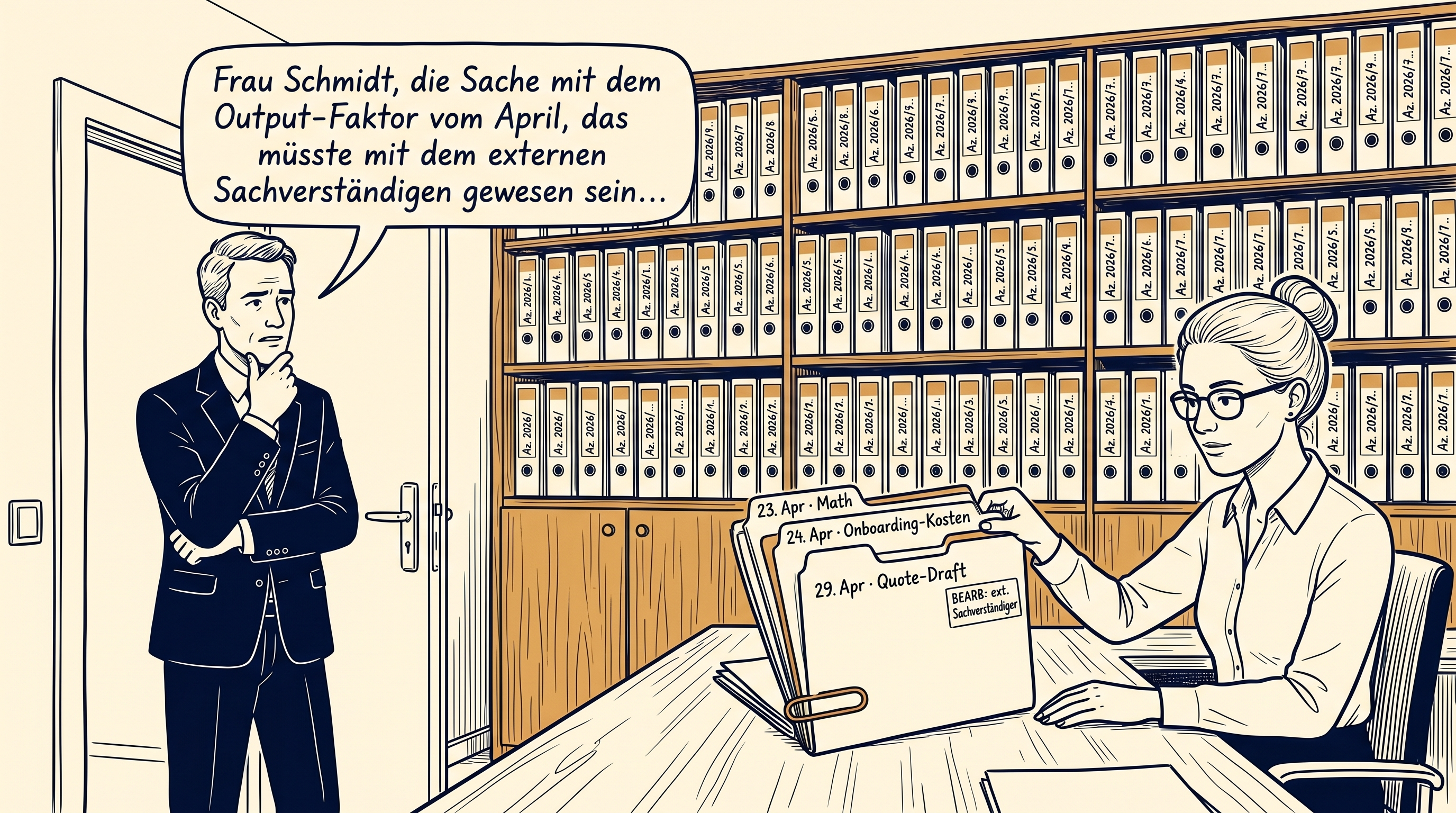
Second, remembering something from weeks ago. With an AI, every new chat is like a new person. Imagine you calmly discuss a calculation with a colleague. Three weeks later you ask a different colleague about it, one who was never in that conversation. They just look at you, puzzled, how should they know. That is exactly how my AI was: every new session was a new conversation partner who knew nothing of the last one, everything started from zero again. Now I just say "remember the calculation with the output factor from three weeks ago?", and the new conversation partner pulls it out, complete, with all the numbers, even though someone else entirely worked it out back then. Like a secretary who hands you the old file before you have finished your sentence. Every old thought becomes working material again, instead of being thought once and lost forever.
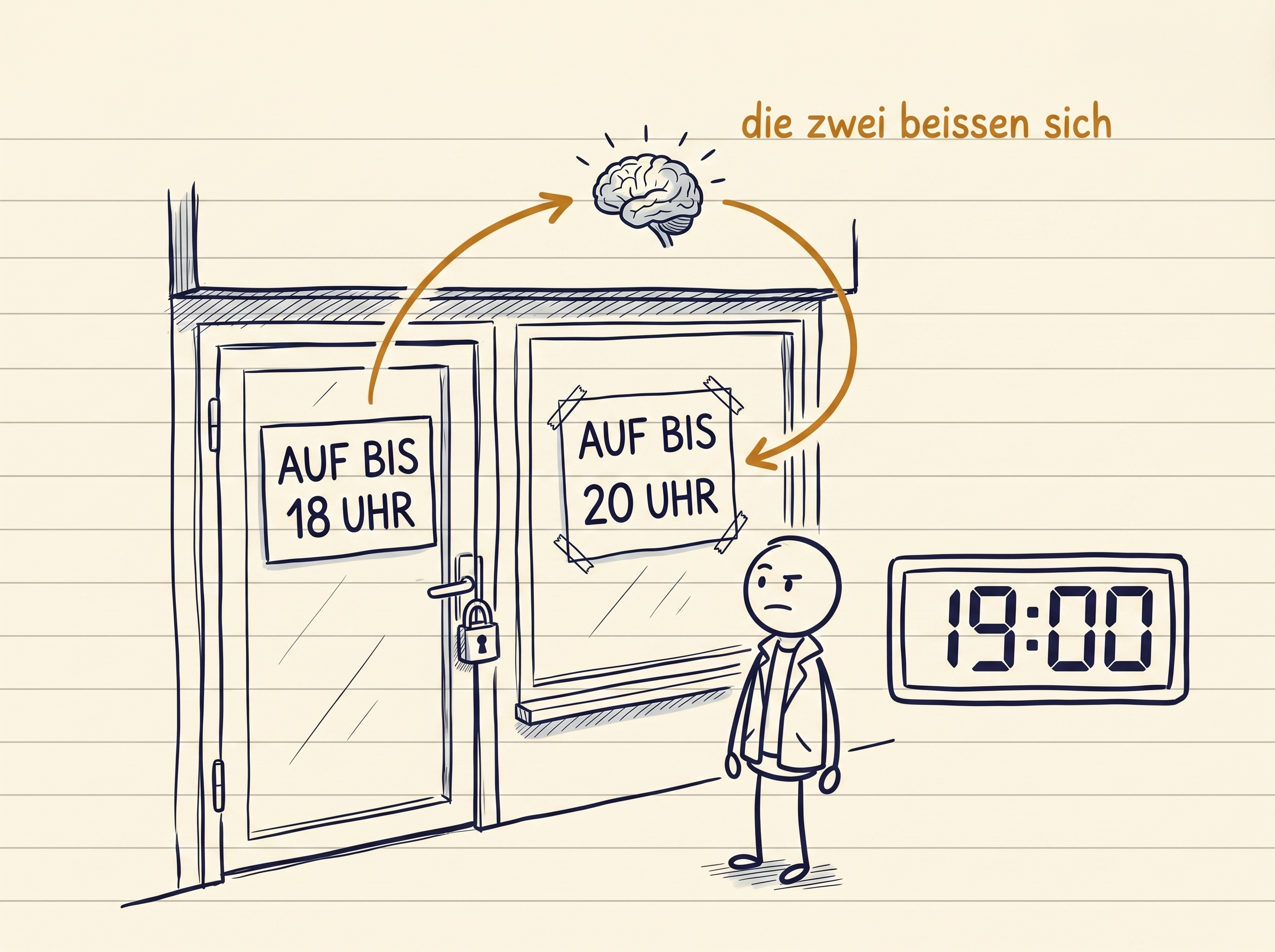
Third, finding two rules that contradict each other. Picture a shop with two signs. At the entrance it says "open until 6 p.m.", at the till "open until 8 p.m.". As long as no one sees both side by side, it goes unnoticed, until a customer stands at a locked door at 7 p.m. and gets annoyed. In my program there are hundreds of such rules, spread across everything. An intern would never find the contradiction, they read each note one by one. My company brain lays all the rules side by side in a single query and says in one second "these two clash". I had built in the mistake myself, weeks ago, and never noticed. One query, and there it was, out in the open.
That is the difference between an intern I explain everything to three times and a team member who knows the whole company. And it is measurable. Jacob has by now largely joined in, so there are two of us. Before, we landed around 50 finished contributions a day, meaning completed changes to the product. Today, on good days, at peak load, we are at around 300. Between the two of us. That is the five-to-sevenfold lever, not estimated, but counted. And only possible because the AI always has the full context of the whole company and no longer starts from zero.
Why I'm telling you this
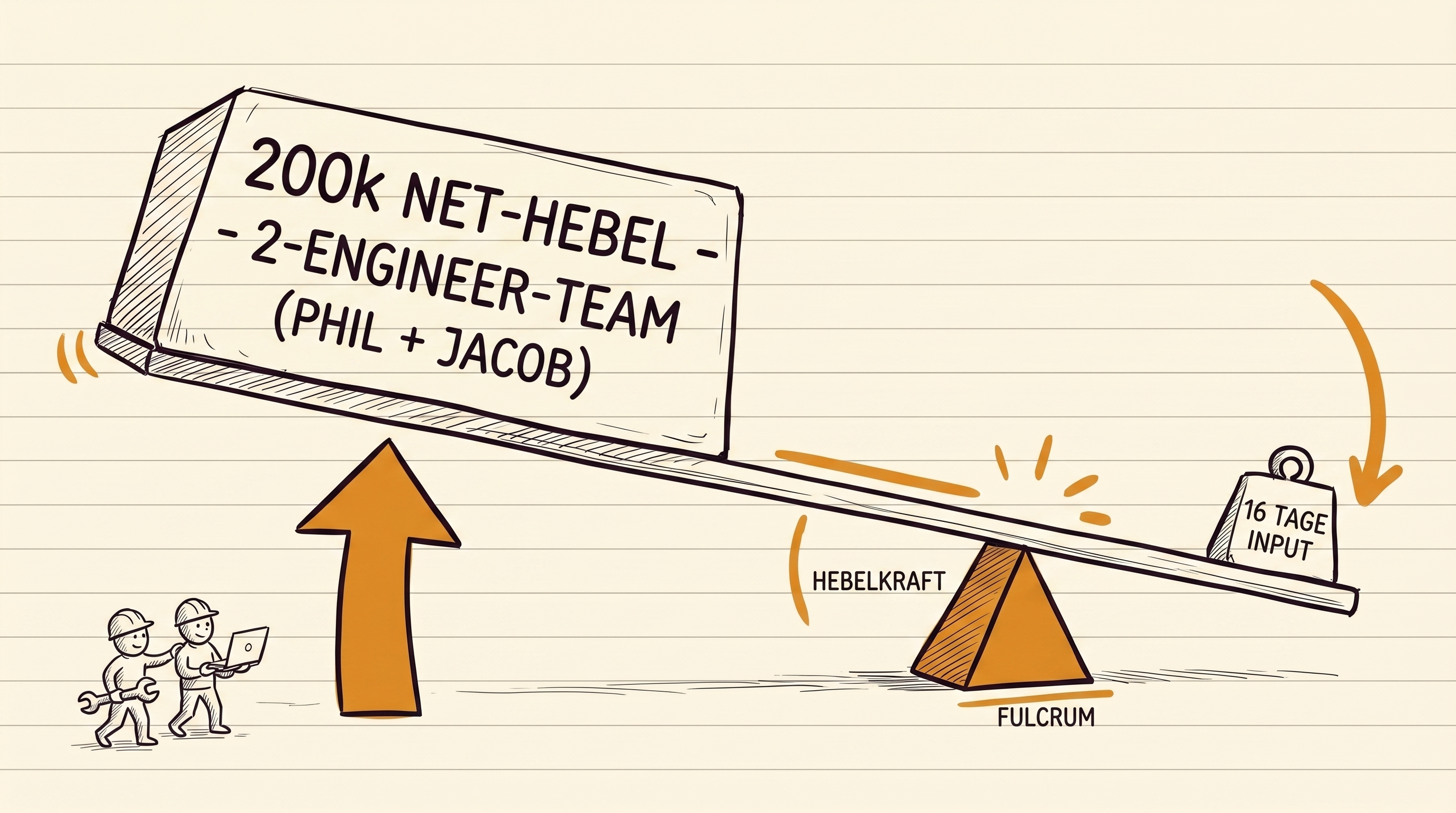
"16 days of effort. A year of leverage. And all of it before the launch."
Let me derive the big number honestly, because it shouldn't fall from the sky. It is a projection over twelve months, not a receipt already banked. It stands on two legs, and you can check both.
First leg, the money I don't spend. Had I taken the obvious path, an experienced developer for half a year plus someone for the ongoing operation of the technology over the year, we would be at around 85,000 euros together. Instead I pay 660 euros a month, so just under 8,000 over the year. On this alone, a difference of about 77,000 euros stays in the account. That is not fantasy money, that is cash that doesn't flow out.
Second leg, the work that is now worth more. Remember the 50 contributions a day that became 300. That doesn't happen once, it happens every day, all year, for Jacob and me. If I count conservatively and say this lever turns the work of the two of us over twelve months into noticeably more finished work, then the equivalent value of that is in the order of a good 120,000 euros. Not because we put in more hours, but because every hour leaves more behind.
Saved money and the added value of time together, over a year, for the two of us, that is in the order of 200,000 euros. I deliberately call it a projection, not a fact. But the one leg is cash anyone can count, the other a time lever I read off the number every day: 50 became 300. Even if I am off by half, the direction is clear.
Behind it stands a simple truth. I had two paths. The obvious one, hiring someone, was the more expensive and the slower one. The other, making my own company's knowledge available, was the one that worked out.
I am still looking for good people, no question. But the fact is: without this rethink, Raven, the meeting intelligence platform, would probably never have become market-ready. Maybe months later, maybe not at all. Having to explain everything from scratch every time eats time I simply don't have. Thanks to this company brain, an AI-backed sovereign meeting platform stops being just an idea and becomes reality.
Write to me
If you are curious how a company brain like this works in practice, or you are at the point yourself where the work is growing over your head, just get in touch. Fastest by WhatsApp, otherwise an email to hello@philflow.io. I read and answer it myself.
Raven goes live on the 1st of July 2026. Head to raven.philflow.io now and sign up.